 스토어팜
스토어팜

















Diabetes Technology Society
페이지 정보
작성자 Major 작성일25-09-05 16:33 조회7회 댓글0건본문
 Subjects 18 years and BloodVitals test older with kind 1 diabetes, kind 2 diabetes, pre-diabetes, or no diabetes, participated at three clinical sites. Each clinical site performed 3 consecutive sub-research. In every of the sub-research, subjects' finger-stick blood was assessed on 6 different marketed BGMSs, and a tube of capillary blood was collected, and the plasma ready from it was frozen and sent to a separate laboratory site to assay on the glucose comparative instrument (YSI). At every clinical site, three separate studies had been carried out with a distinct set of 6 BGMSs in each. This assured that every one 18 BGMS had been tested at all 3 clinical sites. Glycolized blood samples were tested to ascertain the accuracy of BGMSs within the very low blood glucose vary. At every of the three websites during each of the three studies, a further tube of capillary blood was collected from roughly 20 subjects. This blood was glycolyzed to achieve very low glucose values that could not be safely obtained naturally.

The glycolyzed blood was tested on the oxygen insensitive BGMSs whose labels specified glucose dehydrogenase chemistry, which is oxygen insensitive. Plasma from each tube was then prepared, frozen, and BloodVitals SPO2 despatched to the research laboratory site for BloodVitals test assay on a comparative reference glucose instrument (YSI 2300 STAT PLUS Glucose & L-Lactate Analyzer). At the analysis laboratory site, the frozen tubes of plasma had been thawed, completely blended, and assayed on YSI instruments whose accuracy was validated and traceable to the next order using NIST 965b Standards. The results of these measurements of glycolized specimens had been analyzed separately from the results of natural specimens that were used in the move-fail analysis course of. This research was triple blinded. None of the folks concerned in conducting this study (i.e. neither investigators, laboratory workers, statistician, BloodVitals test nor BloodVitals test sponsor) had all the data to break the BGMS code until all results have been calculated and BloodVitals home monitor posted. Analyses have been performed to determine whether the 18 BGMSs, assayed with pure samples (that is blood samples taken straight from a topic's finger), met pre-determined analytical accuracy criteria agreed upon by the DTS-BGMS Surveillance Committee.
The variety of compliant readings needed to go depended on the number of trials. For BloodVitals experience a research of 100 trials, at the very least 91 readings have been required to be within 15% or 15 mg/dL of the reference value. A BGMS that passed all 3 research obtained the DTS Seal of Approval. The frequency of outliers for every BGMS was assessed with a modified Bland-Altman analysis together with calculation of bias, Coefficient of Variation, 95% limits of agreement, and the absolute value of the best 95% limit of agreement. Clinical accuracy was determined by Surveillance Error BloodVitals SPO2 Grid evaluation. The absolute values of clinical threat ranges from 0-four were separated into five bins. Each data level was assigned to a bin corresponding to the absolute value of its clinical danger. 347). Plasma reference laboratory testing was performed on the William Sansum Diabetes Center. Six BGMSs had been assayed in each sub-examine, assuring that every clinical site assayed all 18 BGMSs. The outcomes for every BGMS (i.e., approximately one third from every clinical site) were mixed in the analysis of general compliance to supply the overall mixed outcomes of three repeated research for each BGMS. A Seal of Approval was awarded to any BGMS that handed all 3 of the three research. The determination of whether or not to award a Seal of Approval was not based on: blood oxygen monitor general analytical performance of the 3 studies; variability; clinical accuracy; or BloodVitals test accuracy for testing glycolized hypoglycemic plasma specimens. The topline outcomes are summarized in the tables below. We tested 18 BGMSs in 3 research each. The results had been that only 6 of the 18 BGMSs passed all 3 occasions and acquired the Seal of Approval.
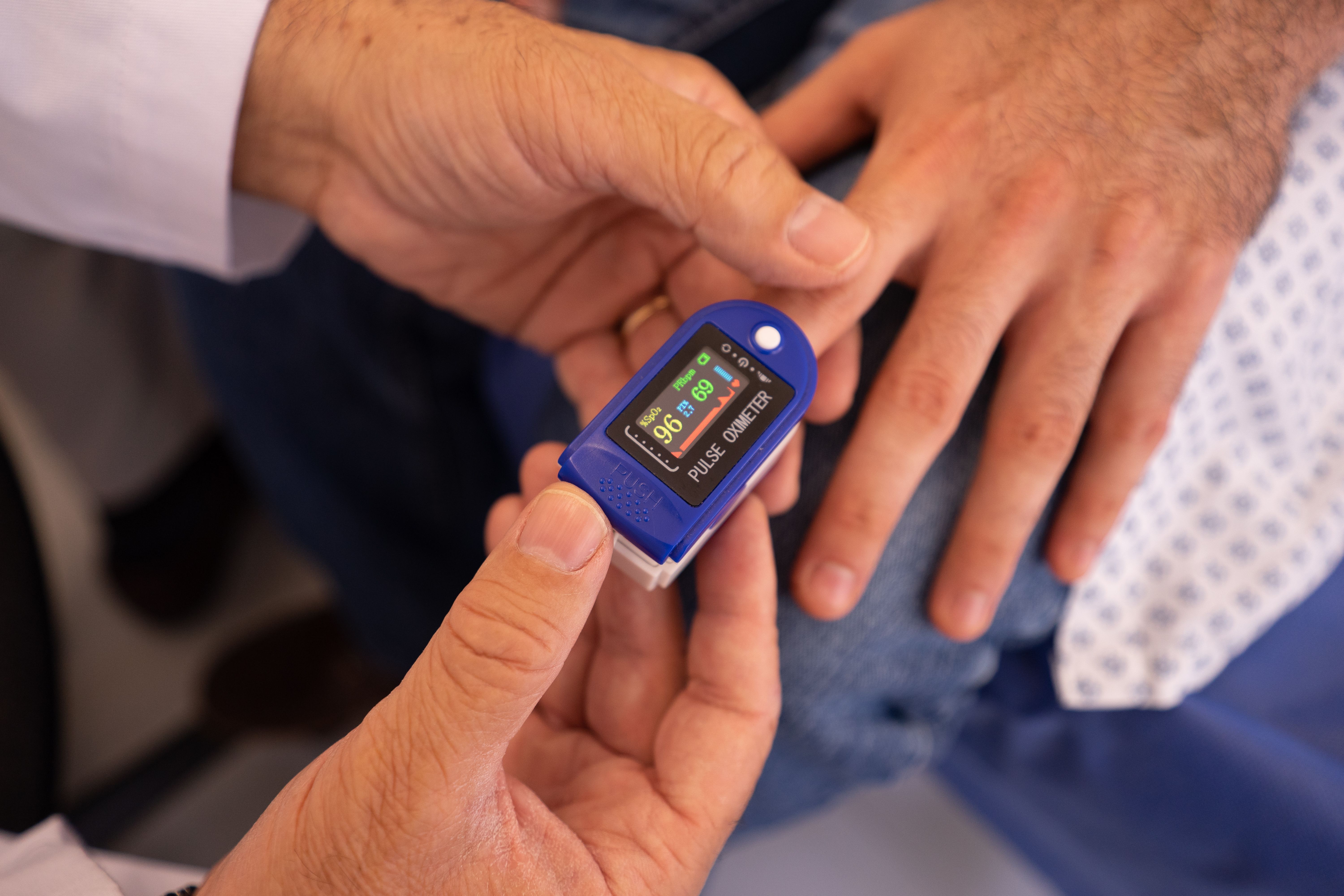
Certain constituents in the blood affect the absorption of mild at numerous wavelengths by the blood. Oxyhemoglobin absorbs mild extra strongly in the infrared region than in the crimson area, whereas hemoglobin exhibits the reverse habits. Therefore, highly oxygenated blood with a excessive focus of oxyhemoglobin and a low focus of hemoglobin will are inclined to have a excessive ratio of optical transmissivity within the crimson region to optical transmissivity within the infrared area. These alternating parts are amplified and then segregated by sampling units operating in synchronism with the crimson/infrared switching, in order to offer separate signals on separate channels representing the crimson and infrared light transmission of the physique construction. After low-go filtering to take away sign parts at or above the switching frequency, each of the separate alerts represents a plot of optical transmissivity of the physique structure at a specific wavelength versus time. AC component prompted only by optical absorption by the blood and various at the pulse frequency or BloodVitals test coronary heart price of the organism.
댓글목록
등록된 댓글이 없습니다.